Showing posts with label Estonia. Show all posts

Sunday, November 9, 2014

Missing from the Celebration of Freedom—Two Leaders Who Died Too Soon

BRISBANE, AUSTRALIA:  As the world marked the 25th anniversary of freedom returning to Eastern Europe, it is sad that two of the wisest post-communisleaders are no longer with us.

In the extraordinary events that followed the collapse of the Berlin Wall, Poland was the inspiration. It had elected a non-communist government months before the wall came down. Lech Walesa, Pope John Paul II are true heroes who changed the world. Ronald Reagan’s strong stance and his 1987 call to “tear down this wall” were similarly decisive. Mikhail Gorbachev, the last Soviet leader-- still alive at 83—courageously allowed the wall to be opened, sacrificing in the process Moscow’s loyalist East German communists. 

Comprehending the enormity of Gorbachev’s deed, an astonished British editorialist wrote that, “all of Stalin’s war time territorial gains in Europe were given up without a shot being fired.”

Events cascaded rapidly. Czechoslovakia’s communist government collapsed within days after the wall came down. Hungary catapulted towards free elections while the remaining regimes-- Romania, Bulgaria and Albania-- toppled like a row of dominoes.  In 1990 East Germans voted to merge their country with West Germany. And late in 1991 the USSR itself collapsed, fragmenting into 15 separate countries.

History, in my opinion, will judge Vaclav Havel of the Czech Republic and Lennart Meri of Estonia the most significant leaders to have emerged from the wreckage of communism.

Meri, Estonia’s president from 1992 to 2001, deserves recognition. Born into a prominent family, when the Red Army invaded in 1940, 12 year-old Meri, his mother and younger brother were exiled via prison train to the Siberian gulags. His father, an Estonian diplomat, had to endure Moscow’s infamous Lubyanka prison. Miraculously the family survived and later Lennart was permitted to attend university. He became a respected writer and filmmaker. He was 60 when the Wall came down.

Meri earned the admiration of Estonians during the failed coup against Gorbachev in August 1991. With his countrymen terrified that a Russian invasion would soon snuff out their drive for independence, Meri took to the radio, assuring citizens they needn’t worry, that he knew the plotters to be clueless and incompetent. There was no invasion and Meri’s grandfatherly counsel had enormous impact. 

Fluent in six languages, most learned as a youth during his father’s postings abroad, Meri repeatedly observed that the end of communism was a beginning, not an end. A tall, dignified man, Meri understood the horror of mass deportation. But remarkably he championed the cause of freedom for Russians. He died in 2006. Were he alive today Meri would be aghast at Russian actions in Ukraine, and equally comforted that Estonia’s security is anchored in Nato and European Union membership.
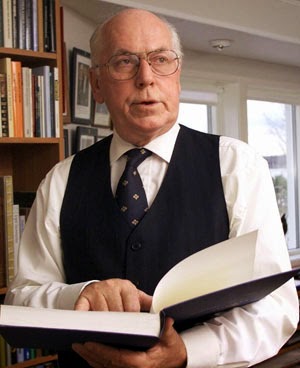

Lennart Meri as president

Vaclav Havel, like Meri, for five decades was deprived of the honest, authentic life he so passionately wanted. Like tens of thousands, he had to make the best of a bad situation.


Like Meri, Havel paid a heavy price for coming from an entrepreneurial family that after the communist takeover in 1948 was denounced as a class enemy. Coming of age during the period of maximum repression, he was banned from universities.  In 1975 he wrote a devastating critique of totalitarianism. In six pages Havel dissected the massive fraud and corruption of communism. Its lofty ideals, he wrote, were hollow.

Reflecting on the 1989 Velvet Revolution in Czechoslovakia, Havel explained to an audience at the World Economic Forum in 1992 how Soviet imperialism imploded.

"Communism was not defeated by military force, but by life, by the human spirit, by conscience…. It was defeated by a revolt of color, authenticity,.. and human individuality."

Famous for his essay on the power of the powerless, Havel lived to see the society where imperfectly, “truth and love prevail over hate and lies.”


Vaclav Havel

Universally hailed as a great European, Havel the dissident playwright spent years in communist jails before being swept to the Prague Castle in the Velvet Revolution. He served as president first of Czechoslovakia and then the Czech Republic from 1989 to until 2003.  Vaclav Havel died at age 75 in 2011.  Writer Anne Applebaum hails Havel’s unique success in making the transition from dissident to national leader.

Alan Levy, the founding editor of the Prague Post, was asked why Prague had become the in spot for émigré young Americans in the 1990s. He replied that he himself had pondered the question, why Prague instead of Berlin, the place that exemplified both the wall and freedom. “Prague,” he concluded, “became the Mecca for young people because of one man, Vaclav Havel. It was Havel’s example of intelligence, modesty, artistry and love that drew people to Prague.”

Havel and Meri, I suspect, would both celebrate 25 years of freedom, while warning of the obvious dangers ahead.


Barry D. Wood covered the collapse of communism and the rebuilding of Eastern Europe for Voice of America. A version of this article appeared on marketwatch.com


Saturday, November 9, 2013

Adventure Bus Travel in Kaliningrad-Russia and Baltics


KALININGRAD, RUSSIA: The first problem is language. If you’re a Russian speaker, it’s easier. This sign at the Kaliningrad bus terminal tells the story.


 The destination beneath the number is ‘Bremen,’ the one at the bottom, ‘Tallinn’ and above that ‘Riga.’  There’s not a word in Latin script anywhere. Inside it’s no better as I found no one at any window who could speak English. I purchased a ticket to Elblag, Poland only by saying those words. Then the clerk wrote down the times of departure, I selected one, she wrote down the price and platform number.  The price was the ruble equivalent of $14.

Once aboard, it was a delight. Every seat was taken. Most of the passengers were young Russians who are studying Polish in Gdansk.  Most were no older than 17, two of my seatmates passed the time watching movies on iPads. 


Reaching the Polish and European Union border, all passengers had to get off. Our baggage was x-rayed and passports inspected. The process took nearly an hour.

But this trip was easy compared to my journey from Klaipeda, Lithuania to Zelenogradsk, the Russian resort town on the Baltic Sea. I had informed the driver that I wanted to get off at Rybachy to visit the world’s first bird ringing station, that since the Germans lost East Prussia after the second world war has been run by the Russian Academy of Sciences in St. Petersburg.

 Somehow the driver forgot and I didn’t see the turnoff sign that was in Cyrillic.  Soon we were among the high rises of Zelenogradsk and it was apparent I had come too far.  The driver was apologetic.  I had no choice but to get a cab the 18 miles back if I was to keep my appointment with the scientists at the bird station.

Luckily I found an English speaker who arranged a cab that charged a reasonable $20 to get me back to my destination along Northern Europe’s greatest untouched natural attraction, the 50-mile long sand dune called the Curonian Spit. 

Two unexpected animal sightings made the detour seem like we were in Yellowstone. Seeing a car stopped ahead of us, we also stopped to see a cluster of very large wild boars. 


A short distance ahead another car had stopped. There a mushroom picker was preparing to feed a red fox that had come by for a handout.


 Wildlife, including moose, is plentiful along the narrow wooded spit because the entire region was a closed military zone during Soviet times.

Klaipeda, the Lithuanian seaport at the top of the Curonian Spit, is a delightful town that deserves to be added to a list of adventure travel destinations. For 700 years the farthest German outpost in the Baltics, Klaipeda has been painstakingly restored and is now very much a European city with fashionable coffee houses and modern hotels.

I had reached Klaipeda via a four-hour bus trip from Riga, which until it was displaced by Vilnius (Lithuania) was the largest city in the three Baltic States.  Despite being a majority Russian-speaking city, all signs are in Latin script.

Riga is a crossroads for north-south, east-west travel and its bus station is situated adjacent to the largest outdoor market in the Baltics.

I started my trip in Tallinn, Estonia at the top of the Baltics. From a modern bus station, where most travelers had purchased their tickets on line, many buses daily head south to Riga, a short four-hour journey away. 


 The Baltic States collectively comprise an extraordinary economic and political success story.  They are modern, efficient and tourist friendly. Distances are relatively small and aside from July and August cities and resorts are not crowded. Kaliningrad, of course, is harder but well worth the effort. It is far more prosperous than on my last visit a decade earlier. The Russians are smart and welcoming, wanting very much to be part of the New Europe. 

 Barry Wood travels often in post-communist Europe. His book, A Bicycle Journey From Estonia to Albania, is coming in 2014.

Wednesday, October 30, 2013

Bare Bones Life for Estonian Pensioners

PARNU, ESTONIA. Enno Kuusmets is a sturdy Estonian who at age 77 has experienced tough times.


 Enno Kuusmets at Parnu’s bus station 

Born four years before the Soviets took over in 1940, his homeland in southeast Estonia was soon occupied by the invading Germans. His father was forced into the Wehrmacht. Enno remembers soldiers digging trenches in his yard as the Germans retreated from the siege of Leningrad.

The conquering Soviets punished Enno’s father with ten-years in a Siberian work camp. His health ruined by privation, he died two years after returning home in 1955. Finishing high school that same year, Enno’s family couldn’t afford bus fare for the 50-mile journey to Tartu for university entrance exams. His alternative was three years in the Red Army. Later he studied economics and moved to Parnu on the Gulf of Riga, one of four urban centers in Estonia.

“The worst times were in1960,” Enno recalls. Newly married, he remembers, “sugar was in short supply, the lines stretched for on for one kilometer and you waited all day for a ration.” Pay on the collective farm where he drove a truck was 50 kopeks per day. His family farmed a small plot and was allowed 20 chickens, one pig and one cow.

 Times were good in the 1980s, he says, until the failed reforms under Gorbachev triggered hyperinflation. “1991,” says Enno, “was a fateful year for me. I lost my wife and then I lost my money,” his ruble savings having become worthless.

Enno Kuusmets today lives in a two-room flat in a squat rundown building in the distant outskirts of Parnu. He survives on a pension of € 360 per month. That’s enough to get by but after paying for electricity, water, building fees, taxes and cable television he has about € 225 for food, bus fare and other expenses. He’s not able to save money to visit his son, a shopkeeper in Tartu. A diabetic, Enno suffered a four-month bout of pneumonia last winter.

                                               
                                                              Enno in his Parnu apartment

Since regaining its independence in 1991 Estonia has been a post-communist success story. Its open economy produced the programmers who partnered with Swedish investors to develop Skype, which under Microsoft still has a major facility in Tallinn. Estonia has a market friendly flat tax and the country has embraced information technology in ways few European countries have. Geopolitically Estonia is anchored in Europe and is a member of the European Union, and since 2011 the euro currency zone.

Enno Kuusmets is not complaining and savors Estonian independence. But he worries about young people as well as his elderly neighbors. Estonia is losing population and educated young people are the ones leaving in greatest numbers.

This county is the size of New Hampshire and Vermont combined but has less than 1.3 million people. In the five years since the 2008 economic crisis about 30,000 people emigrated from Estonia. While a small number, it is equal to over 2% of Estonia’s population. Most young people go to Finland, Britain and even Australia to find greater opportunity and higher incomes. Neighboring Finland is the preferred destination as its language is similar to Estonian and Finnish salaries are typically three to four times higher. The average monthly wage in Finland is € 3,200 compared to € 800 in Estonia.

Medicine and health care are severely impacted by emigration. In a nation with this low a population losing even five specialist doctors is a large problem. Estonia typically certifies about 150 new nurses each year. But in both 2010 and 2011, according to the ministry of social affairs, more nurses emigrated than graduated from nursing schools.

Parnu, waiting for a bus outside typical dwellings 

Some analysts challenge the assertion that emigration of the skilled and young is a problem. Rather, they say, the open labor markets within the European Union are positive as Estonians not only send remittances home but return with fresh skills. But make no mistake, times are tough in Estonia and not only for the elderly. Economic growth this year will be no more than 1.5%. The economy is not producing enough jobs and the 20 % youth unemployment rate is misleading because so many young job seekers have left the country.

Enno’s pension is generous compared to what is paid in the neighboring Baltic States of Latvia and Lithuania. But it is well below the € 800 to € 1,000 the European Union pays each month for the living expenses of university students participating in its Erasmus exchange program in member countries. #